

.svg)
Why do cash deposits matter?
What do checking customers want most? Recent JD Power data says it’s convenience. It’s a key driver in checking product selection and a key factor in retention.
Financial institutions can make the ATM customer experience more convenient in many ways. Some of the most effective of these are by adding new functionalities and features.
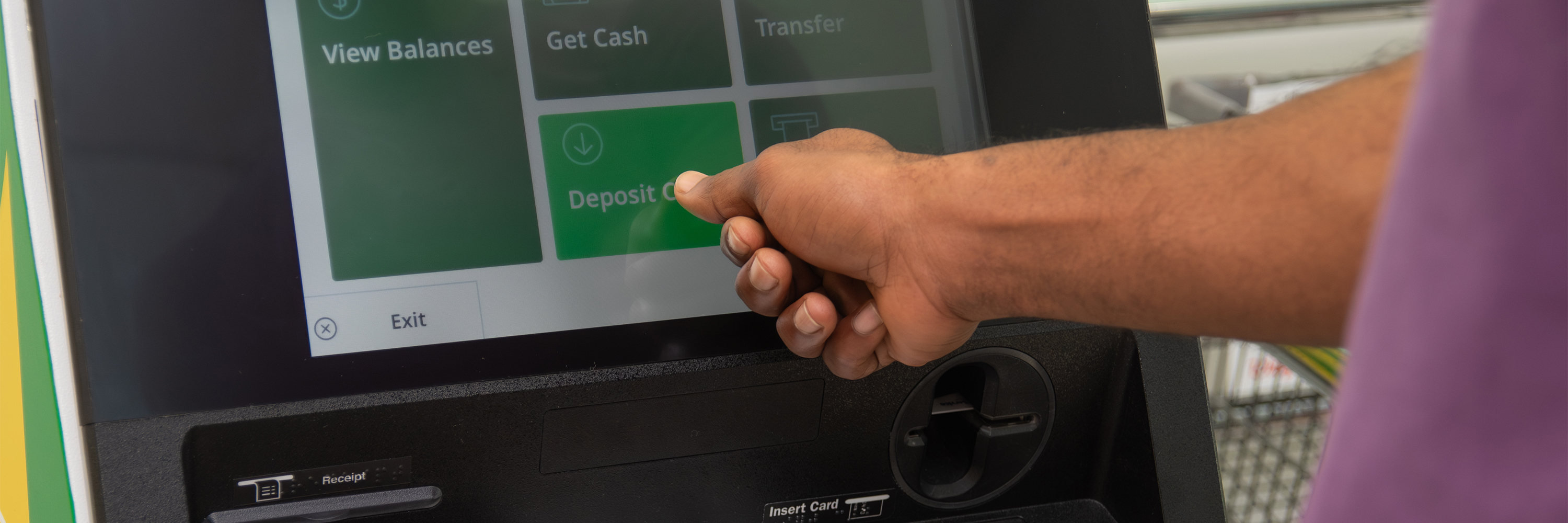
Of these, being able to make deposits—especially cash deposits—at ATMs is highly important to a growing percentage of consumers. In a 2023 RFI Global-Visa survey, an average 76% of consumers said they make cash deposits on a monthly basis; that percentage is higher for certain groups, including gig workers and younger demographics—for Gen Z (those born between 1997 and 2012), it’s 85%.
In many US communities, cash is not only preferred but essential. Many consumers prefer digital money or have multiple and non-traditional sources of income, so depositing cash quickly at convenient locations is a major driver of financial institution preference and loyalty.
“Cash deposits at ATMs enhance customer satisfaction,” says Greg Donahue, VP of Solution Management at NCR Atleos. “Giving consumers more convenient ways to accomplish their everyday banking helps financial institutions win and retain customers.”
Network scale & impact
By expanding the number of ATMs that accept deposits (along with other popular features like split deposits, account openings and payments), financial institutions can deliver the conveniences customers seek.
This can be done by adding owned ATMs to their fleets in retail locations where customers shop and run other errands, by using ATM utility networks to quickly expand customer access to deposit features and—perhaps most effectively—a combination of the two.
Scaled, secure ATM networks can strategically expand a financial institution’s footprint, increasing visibility and access in places where customers want to make deposits. For example, our Allpoint retail ATM network —the world’s largest—will process over $1B in cash deposits in 2025. That’s nearly double 2024, so clearly, the demand is both present and increasing.
Customer experience benefits
Not only do customers value being able to make deposits at ATMs, they also value the accompanying benefits:
More banking hours. When customers can make deposits at ATMs, their banking hours extend well beyond traditional banking business hours—an additional convenience.
Less waiting. When ATM-first customers DO need the personal attention of a teller, their wait in line will typically be shorter when more customers are using ATMs for deposits and other routine transactions.
Immediate funds. When cash is deposited at an Allpoint ATM, it is counted and authenticated on the spot, using advanced technology to identify counterfeits. This makes it possible for the deposit to appear in the customer’s account either immediately or by the next business day.
Small business support. Small businesses can use ATMs to make late and more frequent intra-day deposits, securing their day’s proceeds in their accounts. When they have more ATMs to choose from, the convenience level is higher and the customer experience is better.
ATM networks can solve for gaps in cash deposit acceptance
Utility ATM networks like Allpoint give financial institutions convenient, cost-effective ways to implement and scale account access for customers at more retail locations. They can also be used to facilitate expanded access to underserved areas without heavy infrastructure investment.
Cash deposits at utility networks like Allpoint also offer a lower-risk way to accept cash deposits because the acquirer assumes the liability and any obligation to resolve claims (Reg E protection).
Strategic value for financial institutions
Offering cash deposit functionality at ATMs also offers valuable benefits for financial institutions:
More customer focus time. Shifting transactions from the teller line to ATMs can transform the way branches work, allowing them to focus on providing great service to customers in higher-value customer interactions.
Operational efficiency and security. Reducing manual cash handling and teller workloads can reduce errors and staff time.
Improved customer experience. Providing more everyday banking functions at ATMs can help financial institutions gain and retain customers by meeting the expectations of digitally native consumers and gaining their loyalty through modern, secure, convenient services.
Strategic growth. Supplementing a financial institution’s ATM estate by using a utility ATM network can be a more cost-effective way to expand self-service coverage than building new branches or deploying standalone ATMs.
.jpg)


Let’s explore what’s possible for your business. Our team is ready to connect and discuss tailored solutions that meet your goals.
Thank you for reaching out. A member of our team will be in touch shortly to continue the conversation.